New Zombie entertainment:
Zombieland movie out this Friday (Oct. 2)
Also check out Max Brook's novels, The Zombie Survival Guide and World War Z: An Oral History of the Zombie War
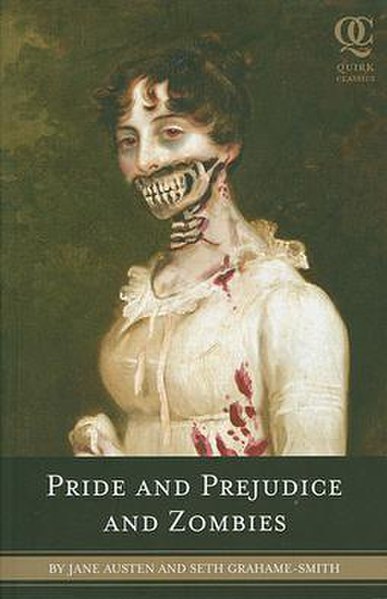 I read Pride and Prejudice and Zombies recently (by Jane Austen and Seth Grahame-Smith). Overall, I enjoyed the zombie infection disease. It is a slow disease that was well portrayed and that slowly manifests, reducing the day till apocalypse and total zombification. A new class of aristocrates, and some commoners, like the Bennet sisters, have become zombie hunters and train in the orient to gain zombie fighting skillz. Fun and quick read; I've proabably read original P&P too often and could tell what parts were changed, so I can't tell you how this book would read if you picked it up fresh. I wouldn't mind more blood and gore for zombie fight scenes, but there were plenty and they were well worked in.
Zombie's in the News:
swine flu vs. bird flu vs. zombie infection! - great chart ~ makes swine fly and bird flu sound like chump-change....
as always, keep up with http://zombies.dammgo.com/ for new zombie updates.
A Canadian group publish a mathematical model of how zombie infection will spread, i haven't read the full article, potentially too much math, but absolute genius to make and publish....
"When Zombies Attack! Mathematical Modelling of an Outbreak of Zombie Infection"
Munz, et al.
Abstract
Zombies are a popular figure in pop culture/entertainment and they are usually portrayed as being brought about through an outbreak or epidemic. Consequently, we model a zombie attack, using biological assumptions based on popular zombie movies. We introduce a basic model for zombie infection, determine equilibria and their stability, and illustrate the outcome with numerical solutions. We then refine the
model to introduce a latent period of zombification, whereby humans are infected, but not infectious, before becoming undead. We then modify the model to include the effects of possible quarantine or a cure. Finally, we examine the impact of regular, impulsive reductions in the number of zombies and derive conditions under which eradication can occur. We show that only quick, aggressive attacks can stave off the
doomsday scenario: the collapse of society as zombies overtake us all.

2 comments:
Gemma! You're alive!
alive, still kicking, and running to catch up...
Post a Comment